Pages

Showing posts with label tips. Show all posts

Wednesday, November 26, 2008

Spontaneous Setup

There are ways to create (functional) makeshift photo studios indoors. The key is experimentation, otherwise known as trial and error, and simply using whatever you may happen to have on hand. I thought I'd share what I did recently. I needed to shoot portraits, or, rather, I needed one shot of me (not a good idea). Evidently, humans are not my usual subject, but hey. You live and you learn.


As the background was large, unmoveable, in a slightly awkward position/location, and simply not suited to being a backdrop, everything had to be set up around it. Portable, flexible-necked lamps with translucent shades are particularly useful. I normally prefer to simply hand-hold cameras, but in this case it was really not possible. That may sound obvious, but as setup and adjustments took so long, the benefits of using a tripod outweighed the adaptibility of going handheld. Sheet-draped surfaces work wonderfully for backdrops as well. Those large, folded cardboard presentation boards are great. Fortunately, I had help and did not have to rely on selftimer this time...

Wednesday, July 9, 2008

Watch Your Scotchgard

Previously, I had been suggesting the use of strong water repellents like Scotchgard to seal paint. It is a convenient alternative to traditional sealants. However, I have recently noticed several problems. The waterproofer is much more corrosive than it initially appears to be. Unless sprayed liberally over most acrylic paints, no adverse effects are apparent. Also be careful of the following:
  • It discolors. Some mild yellowing is visible, especially with lighter colors.
  • Bleeding- it also causes oil-based inks to bleed through any layers over it.
  • And again, corrosion. It can dissove thin coats of paint and eat through lightweight materials such as tissue paper.

This is, of course, just what I've gathered from personal experience. I have done no experimenting and cannot decisively determine precise effects.

Tuesday, July 8, 2008

Of Colors and Acrylic Paint

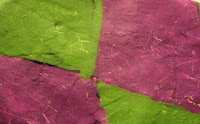
Most of the time, there's nothing wrong with bright colors. They're meant to be light and cheerful, but at other times, bright colors need to avoided or at least used conservatively. So suppose you've already laid down a layer of acrylic paint, hoping that when it dries the color will be not quite as blatantly loud and lacking in subtlety. Suppose, as frequently happens, that this does not occur.

What is this? Barney? The Incredible Hulk? Eww.

Instead of applying another coat (one of the lovely advantages of acrylic), try a light wash. Dilute a dark, neutral color, such as brown or black, and brush it over the offending brightness. This will give the surface a nice, aged, toned-down look. Unfortunately, the effect is not always strong enough. In this case, you will need another coat- but remember to blend first this time.

Second coat over the weak wash. Still wet, but much better.

Sunday, June 15, 2008

Now What?

Or, Where Did the Motivation Go?

Sometimes, inspiration can be elusive. Very elusive. We've all encountered a writer's block. Or perhaps an artist's or crafter's block, whatever we express our creativity through. Inspiration comes in unexpected spurts, but during dry spells, there is nothing to work with or even with which to start building upon. Where should we start? Here's my take:

Before You Start
Especially in the beginning, it is often unwise to grasp at things that don't exist. Pursuing yet-nonexistent ideas doesn't bring them into the light. Wait for ideas to occur in their own time; inspiration comes mostly when it is not being sought.

No Luck?
If you're still searching, start looking at the work of others.... but be very careful not to copy. Most of the time, what you see has been done by people who know what they're doing. The internet is a good resource here. Articles, image galleries, and anything else that sparks interest might help. Don't make any attempts to extract concepts and ideas. Just take it all in.

Brainstorming- or Not
If you're like me, the very word brainstorming causes an automatic brain shutdown. So instead of brainstorming, think of the process as spewing out whatever comes to mind. Think impulsive and instinctive. Lay it down on something tangible if it helps. Freewriting is a good way to get ideas going, whether you are trying to write or not.

Get it Organized
Once you have something, however little, to work with, it's all good. I think we all know where to take it from here.

Was this any help at all? Let me know! I run out of ideas fairly often (usually in the form of papers typed in the last wee hours of the morning)- is it just me or does this seem to happen all the time? It may come as no surprise, then, that I ended up writing a paper about searching fruitlessly for inspiration...